Building Data-Centric SDV Systems on NXP S32 Automotive Processing Platform
Data Foundations for AI: Preparation, Quality, and Maintenance
Overview
This hands-on workshop introduces developers to building deterministic, data-centric SDV and Edge AI pipelines on NXP S32 automotive platforms using the ITTIA DB Platform. Participants learn how CAN messages and other sensor signal data is ingested, managed, analyzed, and transformed into AI-ready insights for battery management, predictive maintenance, anomaly detection, and real-time vehicle intelligence using NXP S32, GoldVIP, and eIQ Auto. Through practical labs, attendees build production-ready pipelines with deterministic data management, power-fail safety, explainable AI, and real-time analytics directly on automotive edge platforms.
Workshop Dates and Times:
- Europe: 2026 June 29–30 at 3:00 PM CET
- Asia: 2026 July 7–8 at 9:00 AM CST/SGT/HKT
- America: 2026 July 9–10 at 2:00 PM ET / 11:00 AM PT
Workshop Location: Online
Online Tutorial Workshop Syllabus
Session I: Edge Data on NXP S32 Cortex-M Control Node with ITTIA DB Lite
Module 1: SDV Reality – Why Data is the Missing Layer
- Evolution from hardware-defined to software-defined vehicles (SDV)
- Limitations of traditional ECU data logging on flash media
- Estimating battery state-of-charge (SoC) for intelligent trip planning
Module 2: NXP S32 Architecture for SDV
- NXP S32 automotive processing platform – hardware platform for SDV (S32G, S32K, S32N, etc.)
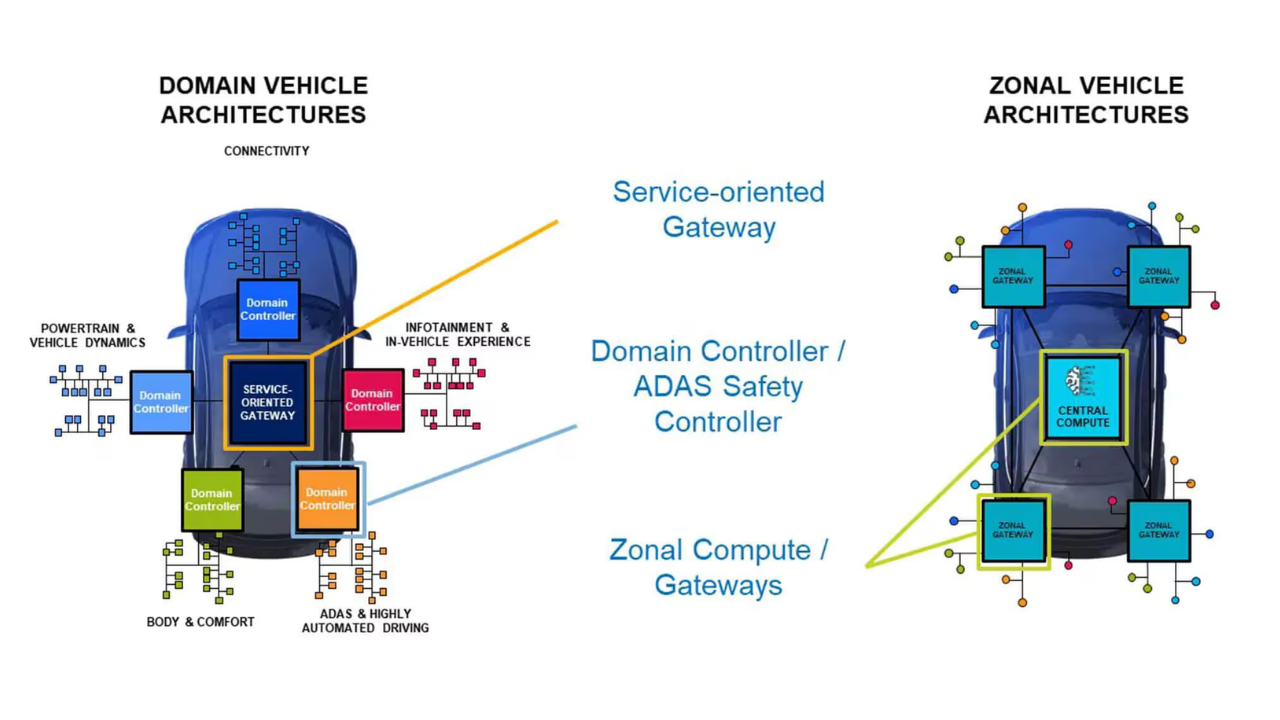
- NXP S32K, S32G, S32N Cortex-M capabilities and roles: service-oriented gateways, vehicle computers, and zonal architectures
- Accelerating development with NXP S32 Design Studio and NXP S32G vehicle integration platform (GoldVIP)
- About NXP eIQ Auto
Module 3: ITTIA DB Platform: the Data Backbone for SDV
- The Data Backbone for SDV: Deterministic data management on Cortex-M cores of NXP S32G
- From vehicle signals to intelligent actions: enabling real-time decision making
- Native C/C++ time-series data management for explainable system behavior
- Power-fail safety: no data loss during reset or interruption
Module 4: Hands-on Lab for Cortex-M
- Setup ITTIA DB Lite on Cortex-M
- Ingest CAN/sensor data: individual cell voltage, current flow, temperature distribution
- Data cleaning with queries to analyze data
- Recap architecture: NXP S32G Cortex-M (compute) + NXP S32 Design Studio (toolchain) + ITTIA DB (data layer)
When the session ends, participants will have built a complete, production-ready data pipeline on NXP S32G Cortex-M cores with:
- Deterministic signal ingestion with ITTIA DB Lite
- Outlier detection and event logging: overvoltage, undervoltage, overcurrent
- Fault history: power-fail-safe time-series data management
- Thermal management: overheat detection and alerts
Session II: Edge AI on an NXP S32G Vehicle Network Processor with ITTIA DB
Module 5: SDV Use Cases in Practice
- SDV overview and limitations of traditional ECU data handling
- Battery management system (BMS) with state-of-health (SoH) and state-of-charge (SoC)
- Service-oriented gateways, vehicle diagnostics and logging, predictive maintenance workflows
- Native SQL time-series data management for explainable system behavior
Module 6: SDV Edge AI Integration
- From vehicle signals to intelligent actions: enabling real-time decision making
- Train a model for on-device SoH prediction and anomaly detection
- Edge AI on NXP S32G with ITTIA DB and eIQ Auto
- Data lineage & traceability: sensors, signals, features, inference, events
Module 7: Safety, Security, Determinism, and Scalability Across NXP S32 Platforms
- Principles of ISO 26262 for functional safety, IEC/ISO 62443 for cybersecurity
- Deterministic data access, consistent update rates, and bounded latency on NXP S32G
- Preserve data integrity across resets and over-the-air (OTA) software updates
- Unified data architecture across NXP S32K, S32G domain controllers, S32N
- Consistent APIs and programming/data model across multiple ECUs and software platforms
Module 8: Hands-on Lab: Battery State-of-Charge (SoC) for NXP S32G
- Battery management system use case
- Setup ITTIA DB Platform on S32G GoldVIP with NXP eIQ Auto
- Ingest CAN / sensor data with ITTIA DB Lite
- Build a continuous AI pipeline with NXP eIQ Auto and ITTIA DB
- Query, analyze, and visualize data with ITTIA Analitica
- Recap architecture: NXP S32G (compute) + GoldVIP (integration) + NXP S32 Design Studio (toolchain) + ITTIA DB (data layer) + eIQ Auto (ML inference)
By the end of the session, participants will have built a complete, production-ready Edge AI pipeline on NXP S32G with:
- Deterministic signal ingestion with ITTIA DB Lite
- Historical data and trends: visualization of SoC and SoH
- Real-time anomaly detection on NXP S32G: voltage drift, overheating
- On-device analytics and health scoring
- Explainable, traceable AI system
Workshop Sample Applications
During this hands-on workshop, you will be trained to design, build, and deploy a real-world, data-driven AI application, gaining practical skills you can immediately apply to embedded and edge systems.
Real-Time Battery Intelligence at the Edge
Workshop participants take on the role of an embedded automotive engineer designing a single-ECU Battery Management System (BMS) for a Software-Defined Vehicle (SDV). Using NXP S32G-based ECUs as the hardware foundation, they begin by capturing real-time battery signals, including cell voltage, current, and temperature, directly on the device. All data is ingested deterministically and stored using the ITTIA DB Platform, ensuring power-fail-safe persistence and structured time-series management.
Participants then build an on-device AI pipeline to estimate State of Charge (SoC) with high accuracy under varying operating conditions such as charge cycles, dynamic loads, and temperature changes. State of Health (SoH), focusing on understanding long-term battery degradation and performance evolution. Rather than relying solely on static models or lookup tables, the system continuously refines SoC estimation using both real-time and historical data stored locally on the ECU. The system learns battery behavior across operating conditions such as charge cycles, load variations, and thermal changes.
As the battery operates, the system maintains accurate SoC tracking in real time, even under transient conditions and noisy signals. As the battery operates, the system tracks degradation patterns, detects subtle anomalies, and updates SoH metrics in real time. The ITTIA DB Platform persistently stores raw signals, feature windows, and AI inference results, enabling continuous validation and refinement of SoC estimation. Workshop participants can analyze trends such as charge/discharge behavior, current profiles, temperature effects, capacity fade, and internal resistance growth, ensuring reliable and explainable battery state estimation directly on the vehicle.
Course Details
Workshop Cost:
- USD $500 per attendee
The workshop fee includes:
- Comprehensive lecture materials
Workstation: This is a hands-on workshop. You can follow along with an NXP S32G GoldVIP device, a USB cable, and a Linux PC or Linux virtual machine.

Edge Data AI Certification for Embedded Devices
Workshop attendees will receive a Certificate of Course Completion for the ITTIA DB Platform on NXPS32G. This certification validates hands-on expertise in deterministic data management, on-device data processing, and Edge AI-ready data handling using the ITTIA DB Platform.
Past Workshop Participants
ITTIA has delivered highly sought-after, hands-on workshops that attract engineers and innovation leaders from across multiple sectors. Our sessions are trusted by companies building real-world, data- and AI-driven embedded systems, and have been attended by teams from leading organizations committed to advancing intelligent edge technologies, including:
Abbott – Acuity Brands – Advances Energy – Applied materials – Avery Biomedical Devices, Inc. – Badger Meter – Cardios – Cat Wranglers
Cognosos Inc. – Continental AG – CPI – Declarative Futures – EDS – Emtech – Everspin – EXFO – Honeywell – Kellogg Northwestern
L3Harris – Magna International – Mayo clinic – Megavolt Labs – Milwaukee Tool – Mold Masters – Nidec Global Appliances – OTTO Engineering
Philips – Resideo – Schneider Electric – Siemens – Southland Sensing Ltd. – TITOMA – TTI Floor Care – Wind River – Zetron/Codan
Audience
These immersive, hands-on workshops are built for embedded architects and engineers who are shaping the next generation of data-driven, AI-enabled edge systems and want more than theory, they want results. Through practical, expert-led sessions, participants learn how to select the right device platform, design deterministic real-time firmware, and implement robust on-device data management that elevates data to a first-class system asset. The program goes further by showing how to prepare and integrate optimized AI pipelines directly into embedded workflows, while addressing cybersecurity, functional safety, diagnostics, and long-term lifecycle management from day one. By the end of the workshop, engineers leave with the confidence, skills, and real-world experience needed to build intelligent, trustworthy, and future-proof embedded systems ready for production.
These workshops are highly technical, intended for professional engineers and are not suitable for the general public without relevant qualifications.
Workshop Schedule
| Region | Session I | Session II |
|---|---|---|
Europe | Monday, June 29 3PM–6PM CET | Tuesday, June 30 3PM–6PM CET |
| Asia: Register Now | Tuesday, July 7 9AM–12PM CST/SGT/HKT | Wednesday, July 8 9AM–12PM CST/SGT/HKT |
| America: Register Now | Thursday, July 9 2PM–5PM ET 11AM–2PM PT | Friday, July 10 2PM–5PM ET 11AM–2PM PT |
