
ITTIA DB Platform + STM32N6
Building the Data Foundation for Next-Generation Edge AI Devices
The next generation of intelligent embedded devices is being built around a simple truth: AI is only as good as data feeding it. Sensors produce massive streams of signals, vibration, current, ECG, temperature, acoustic signatures, camera frames, and those signals must be captured, structured, cleaned, stored, queried, and synchronized efficiently on-device.
The STMicroelectronics STM32N6 microcontroller family represents a major leap forward in embedded AI capability, integrating powerful compute and neural acceleration designed for demanding Edge AI workloads. But advanced AI hardware alone is not enough. To turn raw sensor streams into actionable intelligence, devices require a deterministic, structured, and power-fail-safe data platform. This is exactly where the ITTIA DB Platform becomes essential.
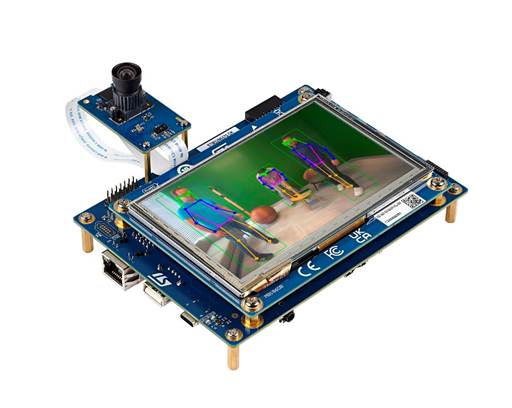
The ITTIA DB Platform: A Data-Centric Edge AI Architecture
The ITTIA DB Platform is designed specifically for embedded and edge devices, providing deterministic data management, real-time analytics, and secure data distribution directly on-device. Together, they create a complete Edge AI data pipeline that transforms raw signals into real-time intelligence.
The Edge AI Data Journey
The lifecycle of intelligent device data follows a predictable pattern:

The ITTIA DB Platform manages this entire lifecycle efficiently on resource-constrained embedded hardware.
Why STM32N6 Changes Edge AI
The success of Edge AI systems depends not only on the AI model itself but on how data is captured, managed, and processed on the device. Modern microcontrollers such as the STM32N6 from STMicroelectronics are capable of running advanced neural networks directly at the edge, but those models rely on continuous streams of sensor data that must be reliably ingested, structured, and prepared for inference.
Without efficient on-device data management, developers must manually handle buffering, storage, feature extraction, and synchronization, which quickly becomes complex and error-prone. Proper data management ensures deterministic data capture, power-fail-safe storage, and efficient retrieval of historical context needed for AI models, such as sliding windows, lag features, and signal statistics.
By organizing sensor signals into structured time-series data and enabling real-time processing pipelines, edge devices built on STM32N6 can transform raw sensor inputs into meaningful features and actionable insights, allowing AI models to operate reliably, efficiently, and with predictable performance directly on the device.
The STM32N6 family introduces a powerful neural processing unit (NPU) designed for high-performance Edge AI workloads. This makes it possible to perform advanced inference tasks directly on the device, including:
- predictive maintenance
- computer vision
- anomaly detection
- medical signal analysis
- industrial automation monitoring
However, running AI models locally introduces a new challenge:
Where does the data live?
AI systems need structured access to:
- historical signals
- sliding time windows
- feature vectors
- inference results
- operational metrics
Without a proper data platform, developers are forced to manually manage complex buffers, log structures, and flash storage mechanisms directly in firmware. This often leads to fragmented code responsible for handling circular buffers, timestamping, data retention, flash wear management, and recovery after power loss.
As sensor data rates increase and AI workloads require historical context, maintaining these custom data pipelines becomes increasingly difficult and error-prone. Developers must also ensure deterministic behavior, avoid blocking operations during flash erase cycles, and protect against data corruption during unexpected resets. Without a structured data management layer, valuable engineering time is spent building and maintaining infrastructure rather than focusing on the application logic and AI capabilities that deliver real value at the edge.
The ITTIA DB Platform eliminates this complexity.
Deterministic Data Management on STM32
At the core of the ITTIA DB Platform is ITTIA DB Lite, a deterministic embedded database designed specifically for microcontrollers and resource-constrained edge devices. Built to operate efficiently on MCU architectures such as the STM32N6 from STMicroelectronics,
ITTIA DB Lite provides structured data management for time-series signals, events, and metadata directly on the device. It enables reliable ingestion, transactional storage, and efficient querying of sensor data while maintaining predictable execution times required by real-time systems.
Optimized for flash media such as NOR, NAND, and SD storage, the database manages wear, background erase operations, and power-fail recovery automatically. By providing a deterministic and power-fail-safe data foundation, ITTIA DB Lite allows developers to focus on building intelligent applications while ensuring that the data feeding Edge AI models remain reliable, organized, and immediately accessible on the device.
Key capabilities include:
Time-Series Data Storage
Time-series data storage is a fundamental requirement for Edge AI systems because many embedded devices continuously collect sensor measurements over time. Signals such as vibration, temperature, current, ECG readings, and environmental metrics must be stored in a structured manner that preserves their temporal order and enables efficient retrieval for analysis.
Proper time-series storage allows devices to maintain historical context, perform sliding-window analysis, and generate features used by AI models. It also enables reliable logging of operational events and system behavior for diagnostics and predictive maintenance.
A well-designed time-series storage approach ensures efficient use of memory and flash media, supports high-frequency data ingestion, and allows developers to query recent or historical data quickly, making it possible to transform continuous sensor streams into actionable intelligence directly at the edge.
Efficiently store high-frequency signals such as:
- ECG samples
- motor vibration
- current consumption
- temperature
- acoustic data
Flash-Aware Storage
Optimized for embedded flash media:
- NOR flash
- NAND flash
- SD cards
- eMMC
Operations are designed to handle:
- wear leveling
- background erase operations
- deterministic write latency
ITTIA DB Lite is specifically optimized to operate efficiently on the types of storage media commonly used in embedded systems, including NOR flash, NAND flash, SD cards, and eMMC. Each of these storage technologies has unique characteristics such as erase block sizes, write constraints, wear limits, and latency behavior.
ITTIA DB Lite is designed with flash-aware data structures and storage management techniques that align with these characteristics, enabling efficient writes, predictable reads, and long media lifetime.
The database manages flash operations intelligently, including background erase scheduling, wear distribution, and transactional updates that protect data integrity even during unexpected power loss. By understanding and adapting to the behavior of embedded flash media, ITTIA DB Lite ensures reliable, high-performance data storage for Edge AI devices while minimizing write amplification and extending the usable life of the storage medium.
Power-Fail Safety
Power-fail safety is a critical requirement for embedded and Edge AI systems that rely on persistent data storage. Devices operating in the field, such as industrial controllers, medical equipment, or agricultural sensors, may experience unexpected resets or power interruptions. Without proper protection, these events can corrupt stored data and compromise system reliability. By using transactional storage mechanisms, data operations are completed atomically, ensuring that either the entire operation succeeds or no changes are applied. This approach preserves database integrity and guarantees that previously stored information remains consistent even if power is lost during a write operation. As a result, systems can recover quickly and continue operating with reliable data once power is restored.
Data integrity is preserved even during unexpected power loss through transactional storage.
Preparing Data for AI
AI models require structured features, not raw signals.
The ITTIA DB Platform enables on-device feature preparation such as:
- sliding windows
- lag features
- moving averages
- signal statistics
- anomaly metrics
For example, a vibration monitoring system may convert raw sensor data into:
- RMS vibration
- frequency spectrum
- temperature delta
- historical trend
These features are then fed directly to AI models running on the STM32N6 NPU.
Real-Time Insight with ITTIA Analitica
ITTIA Analitica transforms embedded device data into observable intelligent systems by providing real-time visibility into the data captured and processed directly on the device. As sensors generate continuous streams of signals, such as vibration, temperature, current, or physiological measurements, ITTIA Analitica allows engineers and operators to explore, query, and visualize this data through customizable dashboards and analytical views.
By connecting to the structured data stored in the device’s database, it enables users to monitor trends, inspect events, analyze time-series behavior, and observe AI inference results in real time. This transparency helps developers validate system behavior, understand how models respond to changing conditions, and diagnose anomalies quickly. Instead of operating as opaque black boxes, embedded Edge AI devices become observable, explainable, and manageable systems, where raw signals, features, and intelligence can be inspected and understood throughout the entire data lifecycle.
Embedded devices often need operational visibility. Engineers and operators must understand:
- device health
- sensor patterns
- AI model outputs
- anomaly events
- system performance
ITTIA Analitica provides a powerful interface for observing and querying data stored on devices.
Capabilities include:
- custom dashboards
- time-series visualization
- query-driven analysis
- event inspection
- AI inference monitoring
For example, a developer can quickly visualize:
- motor vibration trends
- ECG signal segments
- anomaly detection scores
- temperature deviations
This turns embedded devices into observable intelligent systems.
Secure Data Distribution with ITTIA Data Connect
While Edge AI devices operate independently, embedded-level insight is still important.
ITTIA Data Connect provides secure data synchronization between devices, and gateways. It enables secure and efficient data synchronization between edge devices and gateway systems, ensuring that distributed systems remain connected and coordinated.
In deployments built around powerful microcontrollers such as the STM32N6 devices often operate in remote or bandwidth-constrained environments where continuous cloud connectivity is not always practical. ITTIA Data Connect allows gateways to stay in touch with STM32N6 devices by securely exchanging curated datasets, events, metrics, and AI insights generated on-device. Through controlled synchronization and encrypted communication, it enables fleets of devices to share operational intelligence, deliver updates, and support centralized monitoring while preserving the autonomy and real-time responsiveness of Edge AI systems running locally on each device.
Capabilities include:
- encrypted communication
- selective data export
- fleet analytics integration
- model retraining data pipelines
- distributed system coordination
Only curated data is transmitted, preserving bandwidth and privacy.
Example Use Cases
The ITTIA DB Platform on STM32N6 enables intelligent applications across multiple industries.
Medical Devices
Wearables and diagnostic systems can capture ECG signals, detect anomalies, and visualize patient trends.
Industrial Automation
Motor health monitoring systems analyze vibration data and predict failures before downtime occurs.
Energy Infrastructure
Smart grid equipment monitors electrical signals to detect instability and optimize performance.
Robotics
Autonomous machines record sensor histories and perform real-time decision making using AI.
Request a demonstration
An Ag-Tech demo from ITTIA showcases how intelligent edge devices can monitor and optimize agricultural environments in real time. Using sensor data such as soil moisture, temperature, humidity, light levels, and plant health indicators, embedded systems can capture and process data directly at the field level. By combining powerful microcontrollers like the STM32N6 with the ITTIA DB Platform, including ITTIA DB Lite, ITTIA Analitica, and ITTIA Data Connect, for on-device data management, analytics, and Edge AI processing, the demonstration illustrates how farms can detect plant stress, optimize irrigation, and improve crop yield. This data-centric approach enables farmers to turn raw environmental signals into actionable insights, supporting smarter and more sustainable agricultural operations. To learn more or request a live demonstration of the Ag-Tech solution running the ITTIA DB Platform on STM32N6 devices, please contact us to schedule a session.
Why Data-Centric Architecture Matters
Many embedded AI projects fail because developers focus primarily on model inference, assuming that once a model runs on the device the system is complete. In reality, the greater challenge lies in data management: reliably capturing sensor signals, structuring historical context, preparing meaningful features, enabling explainability of AI decisions, and maintaining deterministic behavior required for embedded systems. Without a robust data foundation, AI models lack the consistent, high-quality data needed to operate effectively. The ITTIA DB Platform addresses this challenge by providing a structured, deterministic, and power-fail-safe data management layer that allows embedded devices to capture, organize, and process data efficiently, turning raw signals into reliable intelligence at the edge.
From Raw Signals to Real Intelligence
The combination of STM32N6 hardware acceleration and the ITTIA DB Platform creates powerful architecture for building the next generation of intelligent devices.
Together they enable:
- deterministic data capture
- reliable flash storage
- real-time AI inference
- operational visibility
- secure data synchronization
This transform embedded systems from simple controllers into data-driven intelligent machines.
The Future of Edge AI
As Edge AI continues to expand into automotive, robotics, medical, and industrial systems, the need for reliable on-device data platforms will only grow. Intelligent devices must capture, manage, and process continuous streams of sensor data locally while maintaining deterministic performance, reliability, and power efficiency. By combining the capabilities of the STM32 microcontroller family from STMicroelectronics with the ITTIA DB Platform, including ITTIA DB Lite for embedded data management, ITTIA Analitica for real-time observability, and ITTIA Data Connect for secure data synchronization, developers gain a complete foundation for building data-centric Edge AI systems. Together, these technologies enable embedded devices to transform raw signals into structured, reliable, and actionable intelligence directly at the edge, supporting next-generation applications that require both advanced AI processing and robust on-device data management.
From raw signals to real intelligence, the future of Edge AI is data-centric.
